
Most relocated coasters are pensioners. This one hasn’t yet had its fourth birthday, and it is already on a lorry.
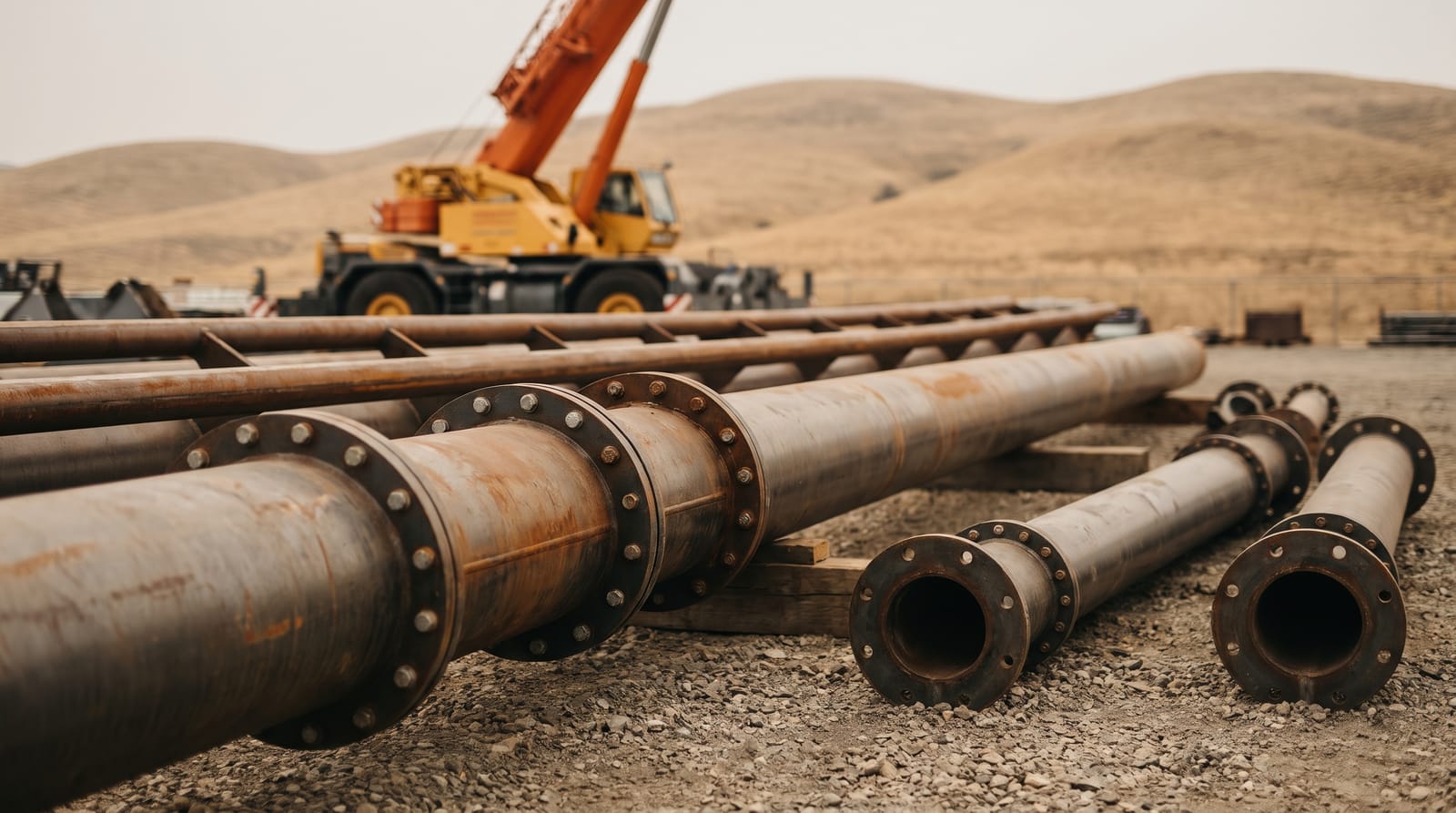
The first track and support pieces of ArieForce One arrived at Six Flags Magic Mountain in California on 29 October 2026, according to Six Flags officials quoted by the Orange County Register and reported by Blooloop. The coaster, built by Rocky Mountain Construction (RMC), opened at Fun Spot America Atlanta on 31 March 2023. Six Flags says it will keep the name and reopen it in 2028, though an earlier Six Flags statement left the window as 2028 or 2029.
What happened
Fun Spot America announced on 25 June 2026 that its Atlanta park would close permanently on 2 August 2026. On 3 September it said ArieForce One had been sold, and Six Flags was named as the buyer. Fox 35 reported Six Flags COO Mark Pauls saying “the story isn’t over” at the time, without naming a park; Magic Mountain was confirmed later.
Six Flags Magic Mountain president Brian Oerding told the Orange County Register that there is “substantial planning and engineering work still ahead”. The trains are going to Rocky Mountain Coasters in Idaho for refurbishment, Blooloop reports, while the track and supports are delivered in stages.
The detail
| ArieForce One | |
|---|---|
| Manufacturer | Rocky Mountain Construction (RMC) |
| Opened | 31 March 2023, Fun Spot America Atlanta |
| Height | 47 m (154 ft) |
| First drop | 45 m (146 ft) |
| Top speed | 103 km/h (64 mph) |
| Track length | about 1,000 m (3,400 ft) |
| Inversions | 4 |
| Reopening | 2028 (Six Flags); an earlier statement said 2028 or 2029 |
The height, drop, speed, length and inversion count are as reported by Fox 35 and the ride’s Wikipedia entry; Blooloop rounds the height to 155 ft. We could not check them against RCDB, the coaster database, so treat the last foot as approximate. The name honours Fun Spot’s founder, John Arie Sr, and Six Flags has said it will stay.
Magic Mountain’s other big arrival is Vekoma’s Thrill Glider, due in 2027, so ArieForce One follows it a season or two later. Neither park has announced a final layout or station position for the relocated ride.
What it actually means
Start with why the ride is moving at all. Fun Spot said the park could not sustain its operations; nobody has blamed the coaster. Six Flags COO Mark Pauls described it as a ride that “consistently generated excitement, acclaim and passionate fan support”, and a coaster that young rarely comes on the market. The appeal is plain: it skips the longest part of building a headline coaster.
A new custom coaster has to be designed, engineered, manufactured and permitted before anyone digs a footing. A relocated one arrives with a design that is already proven in operation. If you want to see what that process involves, our explainer on how roller coasters are moved walks through it: numbered track sections, crack-testing, fresh foundations and a full recommissioning. The Boudewijn Seapark report on Angry Octo shows the same sequence on a much older, much smaller ride.
Why the age matters
Here the move differs from the usual pattern. Most of the relocations we have covered involve rides decades old, where the big question is what thirty years of wear has done to the steel. A coaster of three seasons has far less to find, which makes the non-destructive testing done at dismantling a formality in comparison, and it makes the cost of the exercise mostly one of labour, transport and new concrete.
The manufacturer matters too. Having the trains go back to RMC in Idaho means the people who built the ride examine the parts that wear fastest. That is a better arrangement than a park trying to reverse-engineer a rolling-stock overhaul on its own.
Note what is not known. Neither Six Flags nor Fun Spot has put a price on the purchase, and reported build costs for the original ride differ between sources, so we will not quote one. And 2028 is a target, not a promise: Oerding’s own words were that substantial planning and engineering work lies ahead.
The Dispatch verdict
This is a sensible, unglamorous piece of business: a good, young coaster rescued from a closing park and given a second home with a bigger audience. The risk is not the steel, which will be examined within an inch of its life, but the schedule. A relocation promised for 2028 that slips to 2029 would be entirely in character for the genre.
If the foundations and approvals land on time, Magic Mountain gets a well-regarded ride for less lead time than a new one. That beats the ride sitting idle after the Atlanta closure.
Further reading: how roller coasters are moved, how coaster safety inspections work, the roller coaster manufacturers guide, and Angry Octo’s journey to its fourth park.